Leopold Ashenbrenner: The Portfolio That's Redefining AI Investment Rotation
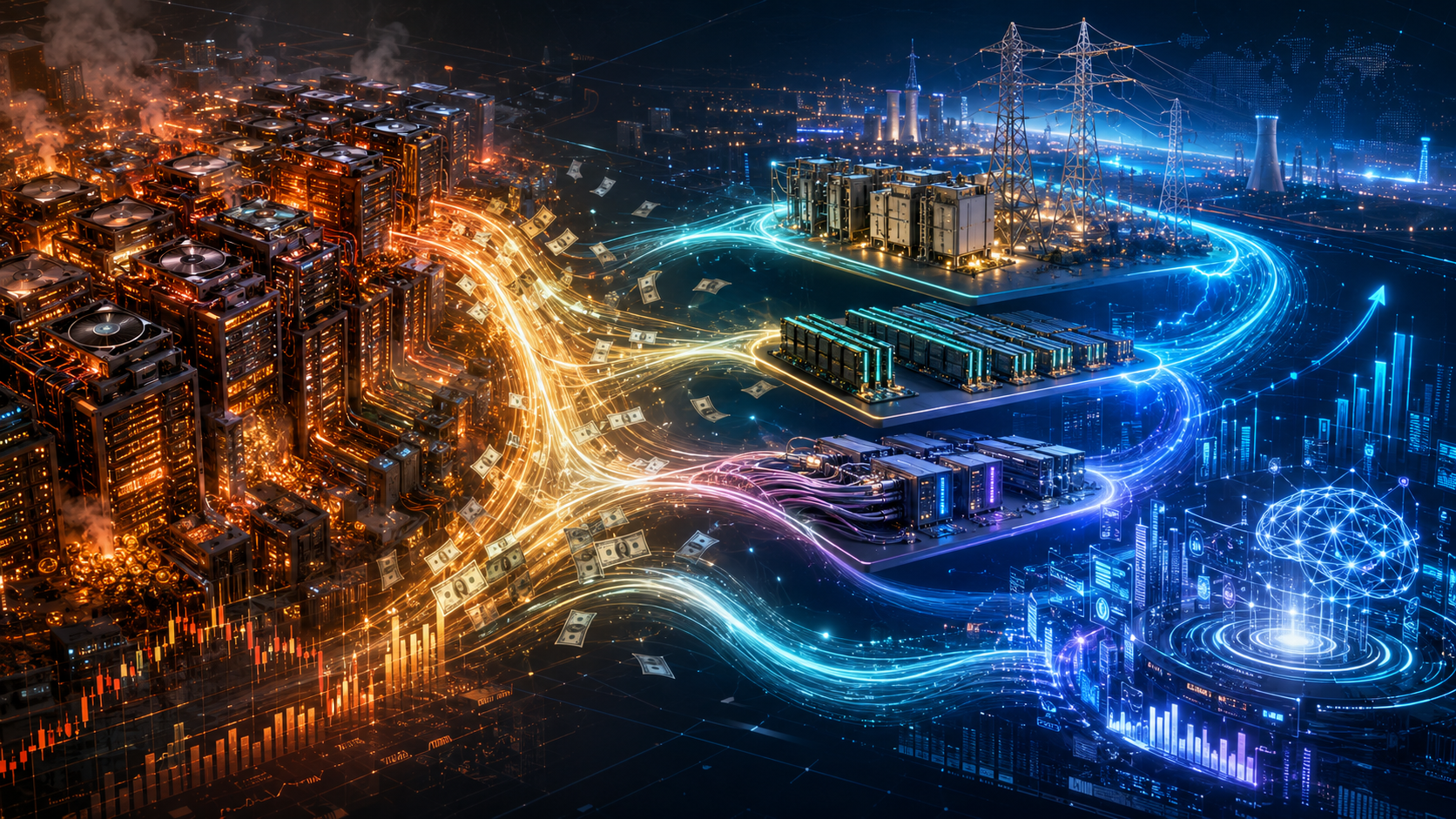
Lisa Tamati reporting on the Limitless podcast conversation featuring Josh and Ejaaz analyzing Leopold Ashenbrenner's fund positioning.
The 24-Year-Old Who's Now Worth $20 Billion (And Shorting NVIDIA)
Leopold Ashenbrenner started a venture fund called Situational Awareness about 1.5 years ago with $200 million raised from friends and family.
His 13F filings show that fund is now worth $13.7 billion.
But here's the plot twist: 20% of his entire fund is invested in Anthropic, a privately held company that didn't show up in those 13F filings.
When you add his Anthropic stake (which Wall Street Journal sources confirm), his total assets under management are now approximately $20 billion.
For context: Bill Ackman, one of the most celebrated investors in the world with 30+ years of experience, has a fund worth just around $20 billion.
Leopold is 24. He's been doing this for less than 2 years. He has zero professional investing experience.
And he's already matching the AUM of one of the greatest investors alive.
The Controversial Short: Why He's Betting Against NVIDIA
When Leopold's portfolio was revealed a month ago, everyone had the same question:
Why does a 24-year-old bullish on AI have $9 billion in SHORT positions on NVIDIA?
NVIDIA is:
- The most valuable company in the world
- Selling more GPUs than it can manufacture
- Has near-infinite margins
- The hottest stock on the planet
So why would Leopold be shorting it (through puts and options, not direct shorts)?
The answer just got revealed: NVIDIA is raising $25 billion in debt.
"They're not borrowing out of need. They're borrowing because they can get essentially risk-free money." — The hosts explain
Here's what's stunning: NVIDIA has $13.7 billion in cash on their balance sheet. They could just spend that. Instead, they're raising debt at near-government bond rates (4x oversubscribed, $85 billion wanted for $25 billion raised).
On the same month they announced:
- An additional $80 billion in stock buybacks
- A 25x increase in dividend (from 1 cent to 25 cents per share)
"A company doesn't hand $80 billion back to shareholders and raise their dividend 25x in the same month it borrows out of need." — Josh
So NVIDIA is clearly fine. But Leopold's bet isn't that NVIDIA collapses. His bet is that the semiconductor infrastructure trade is overcrowded and money is about to rotate somewhere else.
The Rotation Leopold Predicted (And Is Already Winning)
This is where Leopold's thesis from his original 65-page "Situational Awareness" essay becomes prophetic:
"Money will rotate from semiconductors and infrastructure specifically into other bottleneck constraints."
Here's what's actually happening in his portfolio:
Shorting (through puts/options):
- NVIDIA
- ASML (semiconductor equipment)
- Oracle (cloud infrastructure)
Going long:
- Power/energy — His #1 allocation (Bloom Energy and others)
- Memory — DRAM companies
- Neo-cloud providers — CoreWeave and Iron (AI cloud service providers)
- Optical/fiber — Companies like Corning and Light
- Anthropic — 20% of the fund ($7 billion of his $20 billion total)
"The picks and shovels trade is extremely overcrowded. Leopold isn't bearish on AI infrastructure. He's just rotating out of the semiconductor layer specifically." — Ejaaz
From Picks & Shovels to Mining for Intelligence
The thesis is elegant:
Everyone has been chasing the same trade: Buy semiconductors, GPUs, infrastructure. It's crowded. Valuations are stretched. The easy gains have been made.
Leopold is asking: Who actually builds the data centers? Who solves the power problem? Who connects the GPUs together? Who trains the models?
His answers:
- SpaceX — Building data centers in space, solving power through solar, training AI models
- Tesla — Building humanoid robots to solve the labor problem in building data centers
- Energy companies — You can't train AI without massive power grids
- Optical companies — Copper wire gets too hot when you have millions of GPUs. Optical fiber is the solution.
- Neo-cloud providers — CoreWeave and Iron provide the infrastructure so AI companies don't have to build it themselves
- Anthropic — Not just a model company. He's betting on the application layer (the actual intelligence/mines) not the infrastructure layer (the picks and shovels)
"Forget the picks and shovels. Invest in the mines. Anthropic is mining for intelligence." — The hosts summarize
Why This Isn't a Bubble (And Why Leopold Might Be Right Again)
The natural pushback: "This sounds like late-cycle mania. Bubble behavior."
But here are the structural differences from 2008 or dot-com:
1. Real customers paying real money
- In dot-com, companies had "eyeballs" but no revenue
- In 2008, banks had toxic assets with no real value
- In AI infrastructure: Companies like Google, Microsoft, Amazon, Meta are paying billions for compute. Real customers. Real revenue.
2. Physical constraints prevent over-leverage
- You can't build data centers faster than physics allows
- You can't manufacture chips faster than fabs can produce them
- You can't upgrade power grids faster than permits allow
- You can't hire enough engineers and electricians to build the infrastructure
- Therefore, you can't over-leverage the way you could in 2008
"By the laws of physics, we can't lever up right now because we're constrained by human capital." — Ejaaz
3. Money is flowing to places that can actually deliver capacity
- SpaceX just hit $3+ trillion valuation
- Energy companies are getting capital
- Optical companies are getting capital
- These aren't speculative—they're solving the actual bottleneck
The Material Layer: Copper, Fiber, Power
Leopold's portfolio reveals something that most investors miss:
You can trace the actual constraints by looking at material demand.
Copper: The single most critical material for close-range high-bandwidth data transfer. Leopold hasn't invested directly, but copper futures are up significantly.
Optical fiber: When you have too many GPUs and copper wires get too hot, you switch to fiber. It's cheaper, more efficient, faster. The next leap in data center architecture.
Power: Every constraint is ultimately a power constraint. Solar, wind, nuclear, grid upgrades—whoever solves power wins.
"The materials play is always interesting. It's the base layer of everything. Copper's one of them. Lithium. There's a whole bunch. That is the core material that goes in to get intelligence out." — Josh
The Secret Weapon: Anthropic at 15x Returns
In March 2025, Leopold invested in Anthropic when it was valued at $60 billion.
Anthropic is now valued at $965 billion.
That's a 15x return in about a year.
And it accounts for about $7 billion of his $20 billion fund.
This is the critical insight: Leopold isn't just trading infrastructure. He's investing in who is mining for intelligence.
Anthropic is building the actual models. CoreWeave is providing the infrastructure. Power companies are solving the bottleneck. All of them win, but from different angles.
Leopold has positions in all three layers, but his conviction bet is on the companies that are actually using the infrastructure to build something valuable (Anthropic).
Where the Money Goes Next (And Who Wins)
Based on Leopold's positioning, here's the predicted rotation:
Phase 1 (Already happening):
Semiconductor infrastructure bottleneck → Power, memory, optical, neo-cloud
- This has already happened. Money has rotated.
- Companies like CoreWeave and Marvell have already run significant gains
Phase 2 (Upcoming):
Unsexy infrastructure → Hardware buildout and actual deployment
- Data center construction companies
- Companies that solve the "build the data centers faster" problem
- Companies that solve the "power the data centers" problem
- Companies that solve the "connect the GPUs" problem
- These are less sexy but more defensible
Phase 3 (Long-term):
Infrastructure commoditizes → Application layer (Anthropic model)
- The value captures in whoever is actually training the best models
- The value concentrates in whoever is best deploying AI in verticals (Eli Lilly, others)
- Infrastructure becomes a utility
The Copy-Trade Question
If Leopold is right, who should you actually own?
Josh's pick: Energy stocks (Bloom Energy)
"No matter what happens, even if AI demand slows, we need more energy. The singular trend that's not going to stop is our demand for energy, electricity, and power."
Ejaaz's pick: Marvell
"It sits at the intersection of what Jensen is investing in (optical fiber and power) and what Leopold is investing in. Jensen put $1.5 billion behind it. And whatever Jensen invests in through NVIDIA has gone up significantly—Intel, CoreWeave, Marvell."
The principle: When powerful people with capital deploy it, follow the money.
Is This Actually a Bubble? Leopold's Answer.
Leopold's original "Situational Awareness" essay predicted this entire rotation trajectory. He's now executing on it.
The key question: Is the current state of AI investment a bubble that's about to pop?
Leopold's implicit answer: No, not yet. But the picks and shovels layer is getting crowded, so rotate.
This isn't contrarian doom-calling. It's pattern recognition and capital reallocation.
And his track record suggests he's right.
The Bottom Line
Leopold Ashenbrenner has turned $200 million into $20 billion in less than 2 years by:
- Understanding the constraint layers — Semiconductor → Power → Materials → Deployment
- Identifying the crowded trade — GPU/semiconductor play is where everyone is
- Rotating early — Moving capital to power, memory, optical, and Anthropic before consensus catches on
- Keeping optionality — Maintaining multiple positions across the stack while taking concentrated bets (Anthropic, CoreWeave, Iron)
He's shorting NVIDIA not because NVIDIA will fail, but because the infrastructure play has run its course and the money is rotating elsewhere.
The real game is: Who can build the data centers? Who can power them? Who can optimize them? And who can actually use them to build something valuable?
Leopold's portfolio suggests those companies are the ones about to capture the next wave of capital.
And if history is any guide, Leopold will be right.
Important Disclaimer
- This is reporting on a podcast conversation, not financial advice
- Valuations, AUM figures and returns are as discussed on the podcast, not independently verified
- All positioning ideas are hypothetical and educational
- Consult a licensed financial advisor before investing
- Past performance doesn't guarantee future results
Lisa Tamati reports on AI investment strategy, capital rotation, and the future of infrastructure at PTLsignal.com
// newsletter
Want more like this?
Join the PTL Signal newsletter. Weekly AI, Bitcoin & market analysis from Lisa Tamati.