Physical AI Is Coming To Healthcare — And It's Closer Than You Think
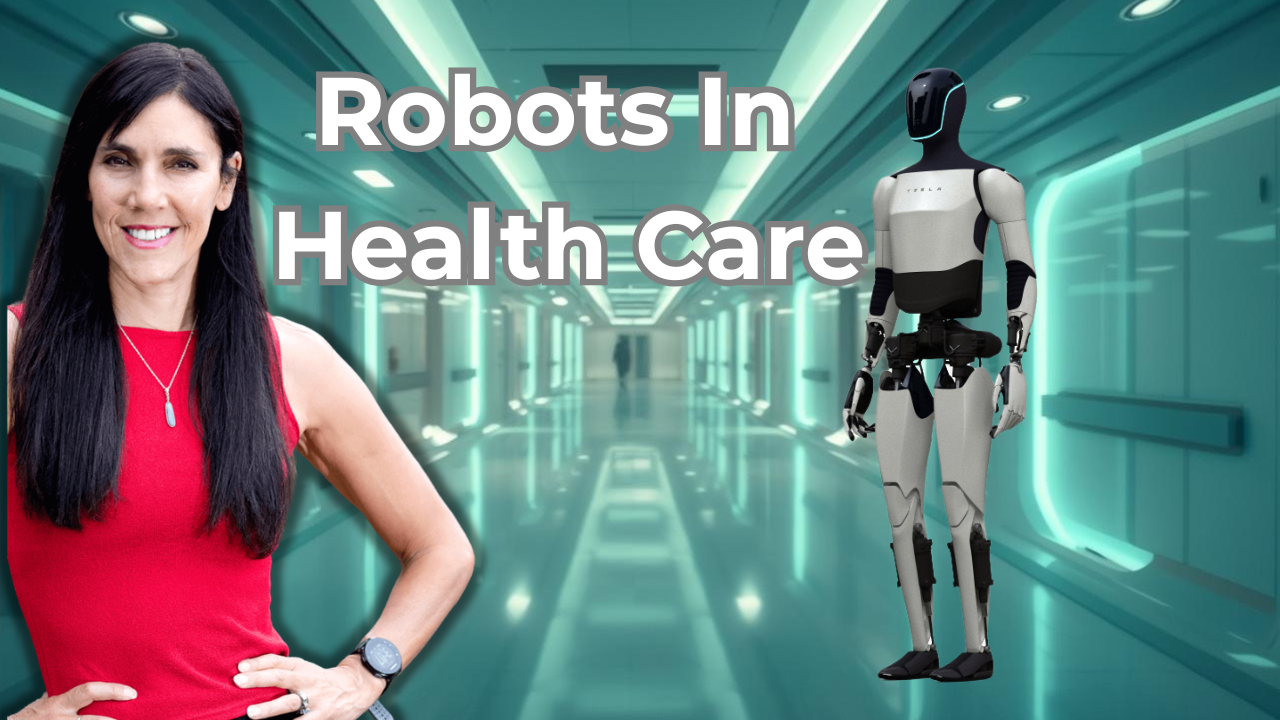
Forget chatbots and diagnostic algorithms. The next wave of AI in healthcare isn't digital — it's physical. Humanoid robots are moving from factory floors into hospitals, aged care facilities, and eventually into our homes. The technology is real, the deployment has already started, and the race to lead is on.
From Wheels To Legs: The Evolution Of Hospital Robots
Physical AI in healthcare isn't a concept — it's already generating data. Diligent Robotics' Moxy robot is deployed across 25+ US hospitals, handling medication delivery, lab sample transport, supply restocking, and linen collection. Over 1 million deliveries completed. Close to 600,000 staff hours reclaimed. At Cedars-Sinai, nurse walking dropped by nearly 300 miles within weeks of deployment.
But Moxy is a transitional form — wheels, single arm, limited environments. The real inflection point is the humanoid.
Tesla's Optimus, Figure AI's Figure 02, Agility Robotics' Digit, 1X Technologies' Neo, Apptronik's Apollo — the humanoid robotics space has exploded in the last 18 months. Manufacturing costs dropped 40% from 2023 to 2024 according to Goldman Sachs, falling from US$50,000–$250,000 per unit to US$30,000–$150,000. Tesla is targeting US$20,000–$30,000 at scale.
These aren't remote-controlled machines doing rehearsed demos. Tesla's Optimus Gen 2 features 22 degrees of freedom in the hands, runs on the same neural net architecture as Full Self-Driving, and is already sorting battery cells and managing inventory inside Tesla's own factories. The Fremont plant is being converted from Model S/X production to dedicated Optimus manufacturing. Tesla has broken ground on a facility targeting millions of units.
The trajectory is clear: factory deployment first, then structured commercial environments, then healthcare, then homes.
Why Healthcare Is The Killer Application
Industrial deployment gets the headlines, but healthcare is where humanoid robots solve the most acute problem on the planet.
The World Health Organization projects a global shortage of 10–15 million healthcare workers by 2030. In New Zealand alone, 8,000 health system vacancies exist today, with a need for 13,000 additional nurses and 5,000 doctors within the decade. Aged residential care vacancy rates are running at 15%. The country has the highest rate of foreign-trained nurses in the OECD.
The maths is simple: the aging population is growing exponentially while the workforce to support it is shrinking. No immigration policy solves this. No pay increase scales fast enough. The gap is structural and it's widening.
Physical AI addresses this directly. Not by replacing clinicians — by eliminating the 30%+ of their time currently consumed by logistics, transport, monitoring, and repetitive physical tasks. Every hour a robot spends delivering medication is an hour a nurse spends with a patient.
The progression from Moxy-style logistics robots to humanoid caregiving assistants follows the same adoption curve as every other robotics deployment: controlled environment → semi-structured environment → unstructured environment. Hospitals are the natural bridge between the factory floor and the home.
The Security And Safety Landscape
Any honest assessment of humanoid robots in healthcare has to confront five risk categories head-on.
Physical safety and the fall problem. A 57kg bipedal robot that loses power doesn't stop — it collapses. Agility Robotics' Digit face-planted at a trade show in 2025. Unlike bolted industrial arms or wheeled robots that simply stop, humanoids require active control just to remain upright. Cutting power is itself a hazard. Tesla's mitigation strategy includes force-limiting (the robot physically cannot exert injury-level force), real-time collision detection, and emergency stops. On the standards side, ISO 25785-1 is under development specifically for dynamically stable robots — the first standard of its kind, requiring fall zone calculations based on robot height, weight, and failure modes.
Cybersecurity. A humanoid robot is a mobile attack surface with cameras, microphones, physical manipulation capability, and network connectivity. Threat vectors include firmware exploitation, adversarial AI manipulation, cloud infrastructure breaches, and ransomware — the last of which has already been demonstrated on humanoid platforms in research settings. The 2025 ANSI/A3 R15.06 update includes cybersecurity requirements for the first time, expanding from 162 to 374 pages. Tesla's advantage here is a decade of vehicle cybersecurity infrastructure. But the field is still behind the technology curve.
Privacy and data exfiltration. This is the most under-discussed risk. A cybersecurity investigation of the Unitree G1 humanoid robot documented systematic telemetry transmission to servers in China every 300 seconds — including continuous dual-microphone audio capture, complete joint position data, and full system state — without user awareness or consent. Separately, 1X Technologies' Neo robot will require remote human teleoperation for initial deployment, meaning an operator controls the robot through your home via its cameras while the data trains autonomous capability. The privacy-by-design frameworks being pushed by ESG governance bodies are necessary but not yet enforceable.
Regulatory gap. ISO 10218:2025 governs collaborative industrial applications. ISO 13482 covers personal care robots. ISO 25785-1 (in development) will address dynamically stable robots. But there are currently no specific standards for humanoid deployment in healthcare or domestic settings. OSHA regulates under the General Duty Clause by default — there is no robotics-specific standard. The regulatory environment is fragmented and reactive. Whoever helps write the healthcare-specific frameworks gains outsized influence over the global industry.
Autonomy gap. Most humanoid demos overstate capability. Many functions shown in promotional videos are teleoperated behind the scenes. Goldman Sachs and IDTechEx both project consumer humanoid deployment no earlier than 2028–2030. The gap between perceived and actual autonomy is itself a safety risk — users may trust the robot with tasks it cannot reliably perform.
The New Zealand Thesis
New Zealand represents a compelling case study for early healthcare robotics deployment.
A unified national health system (Health New Zealand) with a dedicated AI innovation unit (HealthX), political backing, and a 10-year digital investment plan provides institutional infrastructure. Manageable scale — 5.3 million people — enables meaningful pilot programs without the complexity of larger health systems. English-speaking, politically stable, globally trusted, and not a participant in any technology arms race, New Zealand is a credible neutral ground for safety validation.
The argument mirrors Tesla's Robotaxi strategy in Austin, Texas: find a jurisdiction with the right regulatory environment, institutional willingness, and manageable scale to prove the technology before global rollout. New Zealand's favourable regulatory pathway, acute healthcare workforce crisis, and aging population create both the need and the opportunity.
The strategic value isn't just in deploying robots — it's in co-developing the safety standards, privacy frameworks, and deployment protocols that every other country will eventually need. Early participation means shaping the rules rather than inheriting them.
What Comes Next
The convergence is happening faster than most analysts projected 18 months ago. Hardware costs are dropping. AI capability is accelerating. Institutional demand is acute and growing. The regulatory frameworks are being written in real time.
The question for investors, policy makers, and healthcare leaders isn't whether physical AI transforms healthcare — it's who positions themselves on the right side of that transformation. The countries, institutions, and companies that move now will define the standard of care for the next generation.
Physical AI in healthcare isn't a 2035 story. It's a 2027 story with 2025 foundations being laid right now.
Lisa Tamati is the host of Pushing The Limits and PTL Signal, covering AI, robotics, Bitcoin, and markets. She is actively involved in conversations around bringing humanoid robotics to New Zealand's healthcare system.
Related: The Humanoid Robot Inflection Point | The Technology is Inevitable. Are We Ready?
// newsletter
Want more like this?
Join the PTL Signal newsletter. Weekly AI, Bitcoin & market analysis from Lisa Tamati.